


100 Journalists for Acer EMEA’s 50th Anniversary
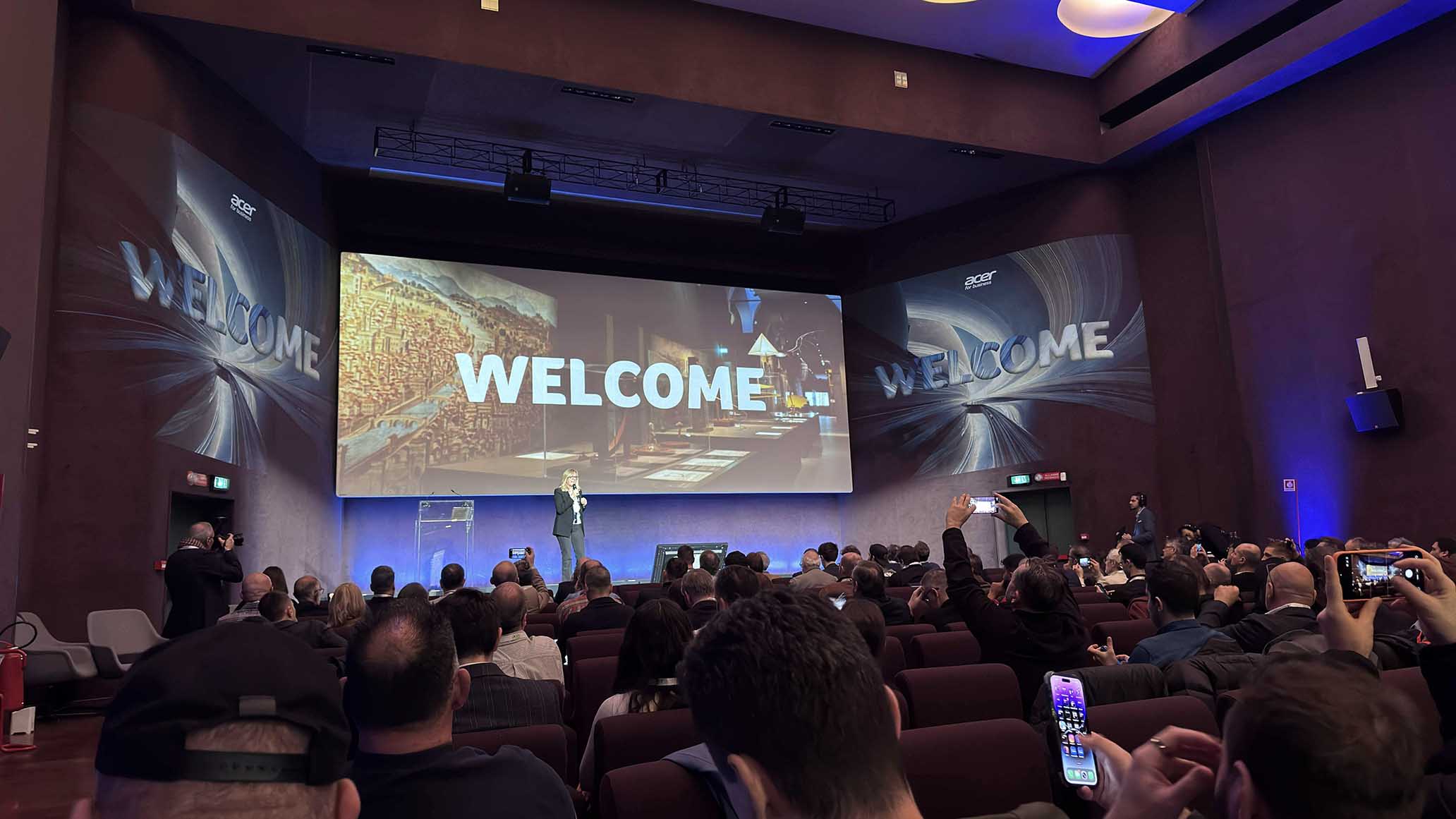
As part of its 50th anniversary celebrations, Acer EMEA welcomed more than 100 journalists from across Europe to the Museum of Science and Technology in Milan, where it marked a transformative journey that looks firmly towards the future through artificial intelligence, sustainability and innovation.
Guests were welcomed by the Acer EMEA Marketing team, including Cristina Pez and Cristina Gualteri, organisers of the event to which we provided our support, as well as by Emmanuel Fromont and Massimiliano Rossi, President and Vice President of the multinational company respectively.
Held within the prestigious setting of the Museum of Science and Technology, the event featured a carefully orchestrated conference programme alongside an exhibition in the Hall of Columns entitled “The Arc of Innovation – From Microprocessor to Mind-partners (1976–2026)”. The exhibition traced five decades of technological and cultural evolution through six of the company’s iconic products, presented in dialogue with six original installations created by students from a range of disciplines, including fashion design, sculpture, interior design, set design, painting and new media.
The fifteen students behind the installations come from three Milan-based institutions – the Brera Academy of Fine Arts, Raffles Milano and the Polytechnic University of Milan – and represent the leaders of tomorrow. Their perspective on the past, present and future of technology offers a valuable lens through which to imagine the priorities that businesses may face in the years ahead.
The event also provided the press with an overview of Acer’s 2025 results, the first figures from 2026, and the company’s latest strategies in artificial intelligence and sustainability.
In 2025, Acer surpassed its 2024 performance, delivering strong results despite a particularly challenging year. Full-year revenue reached NT$275.64 billion, representing a 4.1% increase year-on-year. Both annual and fourth-quarter revenues achieved their highest levels for the equivalent period since the post-pandemic era, despite significant global market volatility and a difficult start to the year.
Portfolio expansion, strengthened partner channels and the growing complexity of technology projects have made the B2B segment a key driver of growth, laying solid foundations for further expansion in the coming years. Combined revenues from businesses outside the traditional PC and display sectors accounted for 32.2% of total revenue in 2025. Within Acer EMEA, commercial volumes represented approximately 30% of total business activity during the year, confirming the strategic importance of this segment across the region.
Early figures for 2026 have been even more encouraging. Acer’s January 2026 revenue reached NT$21.08 billion, marking a year-on-year increase of 39.8% and delivering the company’s strongest January performance in the post-pandemic period. The commercial segment grew by 63.5% compared with the same period the previous year.
At the same time, Acer continues to expand its multiple business engines, operating as an integrated ecosystem of companies united by a shared vision. These include energy storage solutions, electric mobility, electric vehicle charging infrastructure and hydrogen refuelling stations, smart city technologies, gaming, apparel, household appliances, AI-powered medical solutions, cybersecurity, cloud services, industrial PCs, connectivity devices, systems integration, computer repair and maintenance services, and a range of other innovative ventures.
The multinational company has evolved beyond its traditional core business of personal computing and displays by implementing a strategy centred on “multiple business engines” – the creation of a group of companies sharing a common vision. Many of these businesses provide specialised vertical solutions for the B2B market, particularly Altos (servers, AI infrastructure and interactive flat panel solutions), AOPEN (digital signage and edge computing), Posiflex (point-of-sale systems, AIoT, kiosks and industrial PCs), and Opticon (scanning solutions and electronic shelf labelling).
Thanks to the breadth of expertise across the group, Acer can now offer a complementary portfolio that enables commercial customers to access an end-to-end digital infrastructure, from cloud services to retail point-of-sale environments. The primary objective of this diversification strategy is to build greater financial resilience against the cyclical nature of the PC market while broadening Acer’s offering, particularly in emerging markets